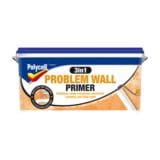
Polycell 3 in 1 Problem Wall Primer
Stabilises,seals and primes absorbent powdery and flaky walls
Your Measurements:
Amount Needed:
For the best result we recommend to use
{coatAmount} for {productTitle}
-
Dries in 2-3 hours (depending on conditions)
-
Stabilises flaky walls
-
Seals powdery and porous walls
-
Primes bare plaster
-
Quick and easy roller application for a longer lasting paint finish
-
Drying Time Dries in 3-4 hours (depending on conditions).
-
Recoatable Dries in 3-4 hours (depending on conditions).
-
Easy use
Product Description
Polycell Problem Wall Primer has been specially formulated to seal, stabilise and prepare flaky, powdery or absorbent surfaces, providing a sound foundation that is ready to decorate. Polycell Problem Wall Primer is a deeply penetrating formula that prepares walls and ceilings for decorating in just one coat.
Application Description
HOW TO USE : 1) Allow new plaster to be fully dry before using this product. 2) Transfer product to a roller tray for easier loading, and apply with a short pile roller evenly to the surface. 3) Treated surfaces are now ready to decorate when dry.
Technical & Safety Documentation
Tips & Advice
-
1. Preparing the SurfacesBEFORE USE : Before you start cover furniture and carpets. Make sure the surface is clean, dry and free from loose particles and mould. Fill holes or cracks with an appropriate Polycell Polyfilla and sand down well. Chalking distemper paints should be thoroughly removed before use, wear eye protection while doing this.
-
2. After useCleaning After Final Use: Clean brushes and rollers immediately after final use to reuse them for future projects, saving you money and reducing waste. Cleaning Steps: 1. Remove Excess Paint: Scrape off leftover paint into a container for reuse. 2. Wash with Warm, Soapy Water: Clean brushes and rollers with warm soapy water in a sealed container like a bucket or tub. 3. Rinse Thoroughly: Rinse out all soap and paint residues into the same container. 4. Dry Naturally: Let tools air-dry and store in a dry, dust-free area. Dispose Responsibly: Settle Solids: Let paint solids settle at the bottom of the container. Pour off clear water for reuse or disposal. Disposal: Let remaining paint solids dry fully before disposing of them as solid waste. Do not flush paint down the drain, including when cleaning painting tools Pro Tip: Watch this cleaning guide from the British Coatings Federation and Dulux Connect contractor Bagnall’s: https://coatings.org.uk/general/custom.asp?page=HowToCleanPaintbrushes
-
3. StoringStoring & Responsible Disposal Do not use or store paint in extreme temperatures and protect from damp & frost. Reuse, Recycle, or Donate- Whenever possible, reuse, recycle, or donate leftover paint. Find local services at recyclenow.com. If no Community RePaint service is nearby, consider advertising paint locally—many good causes need it to brighten community spaces. Dispose Responsibly- Never pour paint or wastewater down drains or sinks. Follow instructions at recyclenow.com to recycle empty packs. Reuse Roller Cages- Remove sleeves and store cages in a dry, dust-free place. Dispose of Unusable brushes and Sleeves- If brushes or sleeves cannot be cleaned or reused, dispose of them in general waste to avoid recycling issues. Paint Wash Water- Collect wash water in a container; don’t pour it into drains or on the ground. Let solids settle, pour off clear water for reuse or disposal, and let solids dry before disposing as solid waste. Do not flush paint down drains, including when cleaning tools.
How much paint do I need?
Measure the height and length of the surface you want to paint (in metres or centimetres).

Your Measurements:
{{!-- This value will be injected with JavaScript --}}
Amount needed:
{{!-- This value will be injected with JavaScript --}}
Actual coverage will depend on the conditions of the surface. If the colour change is strong, more coats may be required.